
-
Understanding Construction Accidents: Legal Rights, Safety Standards, and Complex Liabilities
Why Construction Accidents Are Common and Often Severe?
It’s not surprising that construction sites are often the scene of accidents. Open trenches, precarious scaffolding, heavy machinery, high voltage lines, and dangerous equipment make for a high-risk environment. In fact, according to the Occupational Safety and Health Administration (OSHA), thousands of workers are injured each year on construction sites, and 20 percent of all worker fatalities in the United States happen in the construction industry. In the aftermath of an accident, workers and their families face significant financial hardship, as well as devastating health consequences.

Common Causes of Construction Accidents
Many construction accidents could be prevented with proper care, appropriate training, and attention to safety regulations. The most common causes of construction accidents include:
- Falls from Heights
- Accidents with Heavy Equipment
- Being Struck by Something Falling
- Electrocution
- Exposure to Hazardous Materials
- Slips, Trips, and Falls
- Lifting Heavy Objects
Construction Accidents Law: Legal Rights of Injured Workers
Workers who are injured on the job have certain legal rights. First and foremost is the right to medical care. Next is the right to file for compensation, which can be extremely important in covering the expense of medical care. Filing for workers compensation is the first step, but an injured worker also has the right to file other claims for compensation, as well. If you have been injured, you have the right to get better, the right to be free from discrimination and retaliation, and the right to legal representation.
Safety Standards in Construction
Why do accidents happen? Often, it’s because of a failure to adhere to the safety standards set forth by OSHA and other regulating bodies. OSHA construction safety protocols are extremely thorough, and include mandatory safety training, the use of personal protective equipment, regular equipment inspecting, procedures for identifying hazards, and emergency response planning. When accidents occur, often, someone at some stage of the plan let something slide, resulting in catastrophic consequences.
Complex Liabilities in Construction Accidents
If you are injured in a construction accident, who is liable? Determining this can be complicated. Construction sites have a lot of moving parts, and many different entities involved. If the work environment was not safe or violated OSHA regulations, the general contractor or subcontractors may be responsible. On the other hand, a property owner can be held liable if the property was unsafe. In the case of an equipment failure or defective tools, the manufacturer may be liable, and if a third party vendor or supplier contributed to the accident through negligence, they may bear responsibility.
Steps to Take After a Construction Accident: Should Construction Accidents Law Firms Be Involved?
In addition to the complexity of determining liability, the red tape involved in claiming compensation after an accident can be overwhelming. That’s why it’s so important to enlist the help of an experienced construction accident attorney when you are dealing with the injuries and financial strain of a construction accident. After seeking medical treatment, your next step should be to schedule a consultation with a construction accident law firm, to determine whether your claim is valid. An accident attorney will investigate your accident and file your claim for you, then negotiate a fair settlement.
Challenges in Construction Accident Law and Filing Claims
Determining fault is just one of the complexities in construction accident claims. Workers compensation and insurance can be extremely challenging, because it involves gathering the right documentation, meeting filing deadlines, and dealing with red tape. Having an attorney who is well-versed in personal injury and workplace accident law can make all the difference, because it means having someone on your side with the knowledge and skills to navigate all these complications and work towards maximizing your settlement.
Looking for a Construction Accident Law Firm? Look to the Law Office of Kent L. Greenberg
If you’ve been in an accident on the job site, you owe it to yourself to find the most experienced, reputable law firm you can, to fight for you. Since 1981, the Law Office of Kent L. Greenberg has been successfully assisting clients in the Baltimore County area. Our seasoned professionals work hard to resolve our clients’ legal issues, comprehensively evaluating each case to determine the best strategies for handling each unique situation. Having effectively handled numerous cases in our decades of experience, our firm understands the laws and protocols specific to Maryland and will put our knowledge and expertise to work for you. If you are dealing with the stress, pain, and financial difficulty that comes in the aftermath of a construction accident, you can trust the Law Office of Kent L. Greenberg to work to achieve the best possible decision in line with your best interests. If you are looking for legal services in Carroll County, Pikesville, Owings Mills, or Baltimore County, Maryland, contact us through our website to schedule a consultation.
-
Technology is Impacting Personal Injury Cases
How Do Personal Injury Cases Work? Understanding the Process?
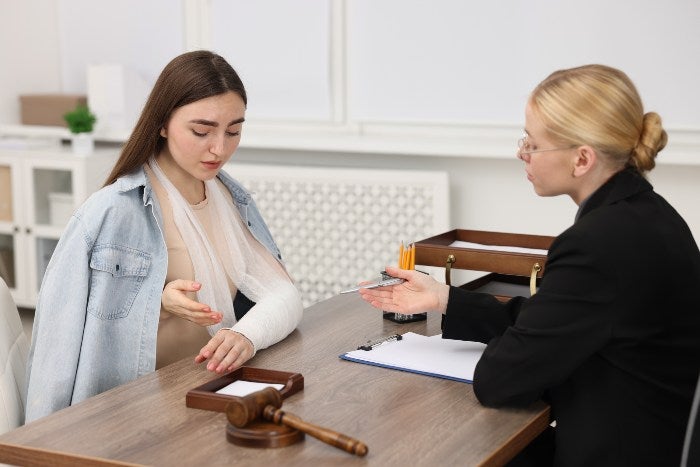
When a person is injured because of someone else’s negligence, it is prudent to file a personal injury case. This process begins with a consultation with an attorney, who weighs the merits of the case and decides whether to take it. Ideally, the injured party will have gotten medical attention and gathered as much evidence as possible to bolster the case. After deciding to sign on, the attorney will begin gathering evidence in earnest. With enough solid evidence, most personal injury cases can be settled without a trial. However, if a settlement can’t be reached, a jury trial will typically take place. During both the information gathering phase and the trial itself, modern technology can be a boon to the attorneys and their clients.
The Role of Technology in Evidence Collection in Different Types of Personal Injury Cases
The job of the attorney is to craft a strong case, based on evidence, to win his or her client an equitable settlement. It’s a huge job, so is it wise for attorneys to turn to AI and other types of technology to help? You’ve heard stories, no doubt, of attorneys who used AI tools like ChatGPT to file court documents, only to discover that the documents cited cases that didn’t exist. With those cautionary tales in mind, though, there is no denying that AI and other technology can help an attorney make a personal injury case. If an attorney is diligent in fact-checking artificial intelligence, it can be an extremely useful tool. AI algorithms can sort through enormous amounts of data, cross references to prior legal decisions, assisting with analysis, and finding facts and patterns that strengthen the attorneys’ arguments. This technology can even be used to wade through social media accounts to find information about people involved in the incident. All this evidence gathering helps speed up the process, which saves time and money for everyone involved with the case. Of course, AI is not the only technology that is useful for gathering data. Drones can photograph accident scenes, inspect faulty structures, and generally give the attorneys information as though they were “on the scene.” Generating 3D models allows attorneys to recreate an accident in a simulation, to better understand what happened and determine fault.
Advantages of Using Technology in a Personal Injury Trial
Technology isn’t just a data-mining tool to unearth evidence, however. Attorneys who properly utilize modern technology can streamline data and organize evidence in such a way that can help amenable parties come to a settlement. If settling is not in the cards, the organized evidence is extremely useful in helping a jury understand the case. The victor in a court case is generally the one with the most evidence, so attorneys who use every piece of technology available to strengthen their case have a definite advantage. Dashcams, surveillance cameras, smartwatches, fitness devices, smartphones, and other types of technology have all become reliable sources of evidence to bolster a case.
How Technology is Being Used in the Courtroom for Personal Injury Law Cases
If a trial should occur, the technology available to attorneys can make their job easier in the courtroom, too. Simulations, accident reconstructions, and animations all have a significant impact on jurors. Additionally, with the tools at their disposal, attorneys can show medical data like CT scans and X-rays to the jury, rather than relying on describing the injuries. While the law can be somewhat dry, bringing in technological tools can help engage the jury, which is a good way to make the case.
Challenges and Limitations of Technology Use in Personal Injury Cases
Of course, as with any new methodology, today’s technology is not without its challenges when used for personal injury cases. A good attorney will not expect the technology to do the work but will scrupulously examine the evidence to make sure it’s valid. Digital evidence can fall prey to tampering, so it’s important for attorneys to be diligent in ensuring that the evidence is authentic and has been managed through strict protocols to keep it securely stored and preserved. Another challenge is that many legal professionals are not quite up to speed with the latest technology, which can hinder their use of it in the courtroom. It should be stressed that there must be a balance between traditional legal practices and the use of new technology.
Types of Damages in Personal Injury Cases
In the end, the goal is to make sure everyone’s rights are protected. There is much riding on a personal injury case, from compensatory damages to medical expenses to lost wages and the loss of future earnings, and more. It is important to have an experienced attorney on your side in a personal injury case, to make sure the outcome is equitable and you receive the settlement to which you are entitled.
For All Types of Personal Injury Cases, Trust the Law Office of Kent L. Greenberg
Since 1981, the Law Office of Kent L. Greenberg has been successfully assisting clients in the Baltimore County area. Our seasoned professionals work hard to resolve our clients’ legal issues, comprehensively evaluating each case to determine the best strategies for handling each unique situation. From family law to personal injury law to criminal law, we have effectively handled numerous cases in our decades of experience. For those who have been injured due to someone else’s improper actions, we aggressively advocate in and out of the courtroom, bringing to bear our understanding of the laws and protocols specific to Maryland, as well as our significant knowledge and expertise. No matter what your legal issue may be, you can trust the Law Office of Kent L. Greenberg to work to achieve the best possible decision in line with your best interests. If you are looking for legal services in Carroll County, Pikesville, Owings Mills, or Baltimore County, Maryland, contact us through our website to schedule a consultation.
-
Common Violations of Custody Agreements
Ideally, both parents would wholeheartedly follow child custody agreements and work together cooperatively for the best interests of the children. Violations of custody orders only harm the child, and unfortunately, they are quite common. When child custody issues affect families in Owings Mills, a divorce attorney can help the non-violating parent find a good solution. It’s advisable to take action sooner, rather than later. Unless the violation was an honest mistake, it’s quite likely that the violating parent will repeatedly test the limits of the other parent’s patience.

Parental Alienation
Parental alienation is arguably the type of violation that is most damaging to the child. It often stems from violations of the non-disparagement clause, which requires both parents to refrain from badmouthing the other parent in front of the child. Disparagement can take many forms. It can include hypothetical statements like, “Your father is always running late. I wonder if he even really wants to see you,” and “Looks like the child support is late again,” and “If you’d rather stay with your friends this weekend instead of seeing your father, that’s fine with me.” Disparagement of the other parent is so damaging because it causes highly impressionable children to turn away from the disparaged parent. In severe cases, the children may voluntarily cut off all contact with the disparaged parent because they’ve been made to think, wrongfully, that this parent is evil or abusive.
Visitation Refusal
When the violating parent has engaged in disparagement and encouraged parental alienation, children often refuse to see the other parent. In other cases, the violating parent may decide to refuse to let the kids go with the other parent. Aside from protecting the kids from an imminent risk of harm—such as if the visiting parent arrives in an intoxicated state—there is no lawful reason to deny visitation. Late child support payments have nothing to do with a parent’s right to spend time with his or her children.
Visitation Interference
Even if visitation isn’t denied outright, the violating parent may attempt to interfere with it in some way. Violating parents might make a habit of scheduling doctor or dentist appointments during visitations, for example.
Education Decisions
Custody violations can include violations of joint legal custody. Legal custody refers to the authority to make major decisions for the child’s upbringing, such as decisions about schooling. If the parents share joint legal custody, then they must both agree to major decisions. An example of a violation occurs when one parent pulls a child out of school and enrolls that child in a different school without consulting the other parent.
-
Understanding the Deposition Process
The process of seeking injury compensation for incidents occurring in the Owings Mills area includes taking legal depositions. During a deposition, a party involved with the personal injury lawsuit will be asked questions. Although this person is sworn to tell the truth at this time, the deposition does not take place in a courtroom. No judge or jury is present.
Your personal injury lawyer can help you learn more of what to expect during the deposition, and you can also watch this helpful animation. It uses the fictitious story of Patty the plaintiff and Debbie the defendant to explain how depositions work. You’ll hear about the types of questions the attorneys might ask. You’ll also learn that if Patty contradicts her deposition testimony while on the witness stand at the trial, she could be accused of perjury.
““
-
What Is Implied Consent?
If you’ve been charged with drunk driving, you will need to have an attorney in Owings Mills explain the legal nuances of your case. Like other states, Maryland has established a rule of implied consent. This means that, if you are driving on the state’s roadways, you are presumed to have already consented to submit to a blood, breath, or urine test. The implied consent law applies to you if you’re pulled over by a police officer on suspicion of impaired driving and the officer asks you to submit to blood alcohol content (BAC) testing.
Since every driver has already given his or her consent to submit to testing, drivers who refuse to do so face legal penalties. If you’ve refused to take the test, your lawyer will inform you that you face a 120-day suspension of your driver’s license. If you refuse the test on a second occasion, the suspension will last for one year. Some people reason that it’s worth it to risk license suspension if it means they won’t be convicted of DUI. But in fact, refusal to submit to a test almost certainly won’t help your case, and it will only add to the penalties you could face.

““
-
What Is Negligent Manslaughter?
The killing of one human being by another may be prosecuted under a few different charges. Homicide, for example, is an intentional killing. Manslaughter is different, but the potential legal penalties are still quite severe. If you or a loved one has been charged with manslaughter, it’s important to contact an attorney in Owings Mills right away. You can also watch this featured video for a quick introduction to this charge.
This legal professional explains that a person can be charged with negligent manslaughter if he or she acted in a negligent manner that resulted in another person’s death. This charge does not require that the defendant intended to kill the other person. For example, a drunk driver might not intend to kill a pedestrian, but the death could occur if the drunk driver strikes that person.
-
What Is Equitable Distribution?
During a divorce, separating property and assets can be a daunting process. Ideally, a divorce lawyer in Maryland can represent your interests during this negotiation process to ensure that your rights are being protected. If you and your ex cannot agree on how to divide the property, the court may make a determination that equitable distribution should occur.
Equitable distribution means dividing all of the marital assets in a fair manner. This standard does not mean that property is divided up equally but rather that is it shared between the two parties in a way that is deemed equitable based on factors such as the duration of the marriage, the financial and nonfinancial contributions made to the family by each party during the marriage, and each party’s current financial situation. Because equitable distribution is extremely complex, having a divorce attorney at your side is essential. Your attorney can accurately represent your claim to marital property during a divorce so that you get your fair share of the assets. He or she may also help with property division negotiations before you go to court, so that you and your ex can attempt to settle the dispute without legal intervention.

-
Mistakes to Avoid After a Car Crash
Car accidents can occur in the blink of an eye. Due to their unpredictable nature, it’s essential to be prepared with the basic knowledge of what to do and what to avoid following a crash. For example, did you know that two simple words might jeopardize your claim? For guidance on this issue and many others, you can consult a personal injury lawyer near Owings Mills.

Apologizing for the Crash
Those two simple words that might compromise your case are “I’m sorry.” It’s human nature to apologize as a way of clearing the air, even if the problem was not the fault of the apologizer. But after a car accident, you need to resist the temptation to apologize to the other driver or to speculate as to the cause of the crash. The other driver may use this apology to claim that you were at fault for the crash. As a result, your compensation may be reduced or denied.
Neglecting to Document the Scene
Hiring an accident lawyer is an effective way to get the most money for your case, but even the most accomplished lawyer needs evidence to substantiate claims. The building of your case begins right after you call 911 and check for injuries. First, exchange information with the other driver. The basic information you need to exchange includes full names, contact information, insurance carriers, policy numbers, vehicle makes and models, license plate numbers, and driver’s license numbers. Next, take pictures of the crash site. Be sure to get pictures of the damage of both cars, the injuries of every involved party, and other evidence of property damage such as broken mailboxes or downed street signs. Then, write down a few notes about the weather conditions and traffic patterns. Write down what you were doing immediately prior to the crash.
Delaying Medical Care
If you are not seriously injured, you might be tempted to go about your daily routine and see the doctor later. But the insurance carrier may point to your delay in medical care as evidence that your injuries could have been caused by something other than the crash. Always get a medical evaluation as soon as the police clear you to leave the scene. Your lawyer will need a copy of your medical records and documentation of your medical expenses.
““
-
A Quick Look at Monitored Exchanges
Depending on the type of child custody agreement you have, your divorce lawyer may recommend a monitored exchange when you and your ex-spouse bring your children back and forth to each other for visitation. If you have entered into a custody agreement that includes a stipulation for monitored exchanges or if you want to add a monitored exchange to your existing child custody case in Owings Mills, your divorce lawyer can help you understand what to expect.
Monitored exchanges reduce the risk of conflict between parents when they have to face each other while sharing custody of their children by ensuring another party is present to witness the exchange. They can happen under the guidance of a family member or friend that both parties trust or at a court-appointed facility. Frequently, monitored exchanges are recommended to ensure that children and parents get to maintain their relationships, even when the relationship between the parents has become acrimonious. They allow the parents to focus on their time with their children instead of the stress of confronting an ex at the start and end of each visitation period.

-
Successfully Dealing with Your Ex-Spouse
Even after a divorce has been finalized, you can expect to continue communicating with your ex-spouse if you share children with him or her. For the sake of your children, it’s essential to keep your interactions with your ex civil, especially when the children are within earshot. If your divorce is still pending, consider talking to your family attorney in Owings Mills about designing the parenting plan to include preferred communication methods. For example, your family lawyer could specify that it is the responsibility of each parent to keep each other informed about any changes in the children’s school schedule, extracurricular activities, and health.
For some helpful tips on overcoming communication problems, watch this interview with a family therapist. She suggests treating the relationship with your ex just like a business relationship; you can be cordial with your ex even if you do not enjoy being in his or her presence. It’s also crucial to avoid using your children as messengers between you and your ex; instead, speak or text directly with your ex.